Golf Fitness Insights
Evidence-based insights on flexibility, speed, and competitive longevity for golfers 45+

12 Golf Trends You Need to Stop (And What to Do Instead)
Why golfers over 45 are wasting money on the wrong solutions, and what actually works for distance, longevity, and performance.
If you're over 45 and losing distance, you've probably tried everything.
New clubs. Lessons. YouTube swing tips. Mental game books. Maybe even one of those trendy assisted stretching franchises.
And you're still losing yards. Still fighting your body through 18 holes. Still wondering why the game that used to feel effortless now feels like a battle.
Here's what nobody's telling you: you're chasing the wrong solutions.
The golf fitness industry is worth over $8 billion, and most of it is built on trends that don't work for competitive golfers over 45. Passive stretching that creates injuries. Equipment upgrades that can't fix a broken body. Mental training that ignores your physical ceiling.
I've spent years working with country club golfers, PGA pros, and executives who refuse to accept decline. And I keep seeing the same patterns: golfers investing in all the wrong things while ignoring what actually matters.
So let me save you time, money, and frustration.
Here are 12 golf fitness trends you need to stop right now, and what to do instead if you want to play your best golf for the next 30 years.

TRAINING METHODS & LESSONS
1. STOP: Stretch Lab & Assisted Stretching Franchises
Here's the uncomfortable truth about these places: most employees need only "a passion for fitness" to work there. No certifications required. No golf-specific knowledge. No movement assessment. No understanding of rotation.
They're strapping you down and stretching you passively. And I've had multiple clients come to me with injuries from these franchises.
It's like getting a massage,you feel good for a day, then your body forgets it happened. You'd need to go three to four times per week for the rest of your life to maintain generic flexibility benefits. And even then, you're not addressing golf-specific mobility. You're not building rotational power. You're not creating lasting change.
DO THIS INSTEAD: Daily 10-Minute Golf-Specific Flexibility Routines
Flexibility isn't something you achieve in five days and keep forever. It's a daily habit.
A focused 10-minute routine that's golf-specific, includes proper assessment, and layers in rotational power, speed, and endurance will do more for your game than passive stretching ever could. This is active flexibility that builds lasting change, not temporary relief. It's sustainable, it's golf-focused, and it actually works.
2. STOP: Generic Cardio (Swimming, Biking, Rowing) for Golf Fitness
Golfers tell me all the time: "I'm already active" (construction job, yard work, cycling) so they don't need golf fitness.
Or they're swimming and biking thinking it translates to the course.
Here's the problem: those activities have nothing to do with walking 18 holes on uneven terrain. Can you walk multiple days in a row without breaking down? Can you handle a walking-only course in Scotland? Can you maintain focus and power through the back nine on day three of a buddy trip?
Swimming and biking won't prepare you for that.
DO THIS INSTEAD: Golf-Specific Endurance Training
Real golf endurance means training for what golf actually demands: walking with a push cart on hills, maintaining power and focus for four-plus hours, playing multiple consecutive days without your body giving out.
This means loaded carries, interval walking, and rotational endurance,not just logging miles on a bike. Train for golf, not for a triathlon.
3. STOP: Heavy Weightlifting for Distance
You think squatting heavy is going to add 20 yards? Not when your hips don't rotate and your thoracic spine is locked up.
Heavy lifting without a mobility foundation is like putting a bigger engine in a car with square wheels. You're building strength your body can't access because it doesn't have the range of motion to use it.
DO THIS INSTEAD: Master Hip-Shoulder Separation
This is where power comes from. The ability to disassociate your lower body from your upper body,to create torque and store energy,is fundamental to the golf swing.
But most golfers can't do it because their bodies won't let them. Learning to move your hips independently from your shoulders, combined with ground force activation, unlocks distance you didn't know you had. No club purchase required.
Flexibility first, then strength.
4. STOP: More Lessons Without Fixing Your Body First
You've been playing your whole life,you know HOW to swing a club.
But your club pro keeps telling you to rotate more, get deeper in your backswing, maintain posture. And you can't do it because your body won't let you.
Grinding on the range with a body that doesn't move correctly in the first place just ingrains compensations. That loss of flexibility is what's causing lost distance. More lessons won't fix a body that can't get into the positions your coach is asking for.
Don't make their job impossible.
DO THIS INSTEAD: Fix Your Flexibility Before Taking More Lessons
Get your body right first, then work with your pro.
When you can actually rotate, hinge properly, and move through the positions your coach is teaching, lessons become incredibly valuable. Your body needs to be able to perform the swing your brain (and coach) is telling it to.
Fix the flexibility limitation, then invest in instruction. Your pro will thank you, and you'll actually be able to execute what they're teaching.
EQUIPMENT & TECHNOLOGY

5. STOP: Buying New Clubs Every Year
You've already tried new clubs. You've already gotten fitted. You've already watched the equipment reviews promising 20 more yards.
And you're still losing distance.
That's because the problem isn't the club, it's the body swinging it. The latest driver can't fix a body that lacks mobility, can't generate ground force, or can't maintain posture through impact.
DO THIS INSTEAD: Get Re-Fitted After Improving Your Body
Here's what actually works: improve your flexibility, mobility, and power first. Then get fitted.
When your body can actually execute the swing it's capable of, a proper fitting becomes incredibly valuable. But fitting a body that can't move properly is like tailoring a suit for someone who's about to lose 30 pounds.
Get your body right, then optimize your equipment to match what your body can now do.
6. STOP: Speed Training Systems Without Mobility Work
Speed sticks and overspeed training are everywhere. And they can work,if your body has the foundation to handle them.
But swinging faster without the mobility to control that speed is a recipe for injury and inconsistency. You're teaching your body to move faster through limited, compensated patterns.
That's not power, that's chaos.
DO THIS INSTEAD: Movement Assessment Before Training
Know what your body can and can't do before you start training it to do more.
A proper movement assessment identifies your limitations, imbalances, and compensations. It tells you exactly where to start,not with some generic program, but with what your body actually needs.
Assessment-based training means faster results, fewer injuries, and sustainable improvement.
LONGEVITY & INJURY PREVENTION
7. STOP: "No Pain, No Gain" Mentality
You're not 25 anymore. Pushing through pain doesn't make you tough,it makes you injured.
The golfers who play well into their 70s and 80s aren't the ones who ignored their bodies. They're the ones who learned to listen, adapt, and train intelligently.
Pain is information, not something to overcome with willpower.
DO THIS INSTEAD: Build Ankle Mobility for Power and Stability
Everyone talks about hips and shoulders. Almost no one talks about ankles.
But your ankles are your foundation for ground force. Limited ankle mobility means limited power transfer, compensations up the chain, and increased injury risk.
Improving ankle dorsiflexion and mobility is one of the fastest ways to improve your stability, power, and reduce lower back stress.
8. STOP: Rest as the Primary Recovery Tool
"I just need to rest and I'll be fine."
Rest is important, but it's not a strategy. Rest without addressing why you're hurting means you'll just hurt again when you start playing.
DO THIS INSTEAD: Prioritize Thoracic Spine Mobility for Back Health
Lower back pain is epidemic among golfers over 45. But the problem usually isn't the lower back,it's the thoracic spine (mid-back) that won't rotate.
When your mid-back is locked up, your lower back compensates. Improving thoracic rotation takes pressure off your lower back, increases your turn, and keeps you pain-free.
This is non-negotiable for longevity. Active recovery, targeted mobility work, proper warmup, strategic strengthening, is what keeps you playing without breaks.
GOLF COURSE NUTRITION
9. STOP: Protein Bars as "Healthy" Golf Snacks
Most protein bars are expensive candy bars. High sugar, unhealthy fats, energy spikes followed by crashes, exactly what you don't want when you're trying to maintain focus for four-plus hours.
They're marketed as healthy, but they're sabotaging your performance on the back nine.
DO THIS INSTEAD: Whole Food Snacks (Nuts, Fruits, Fiber)
Simple, whole foods provide stable energy without the crash.
A handful of almonds, an apple, something with fiber,these keep your blood sugar steady and your focus sharp. They're cheaper, healthier, and actually work for sustained performance.
Golf is a marathon, not a sprint. Fuel accordingly.
10. STOP: Sports Drinks & Energy Drinks
Sugar overload in a bottle. These drinks promise energy but deliver crashes, jitters, and poor decision-making on the course.
Plus, most golfers are dehydrated and don't even know it, especially in heat. Chugging sugary drinks makes it worse.
DO THIS INSTEAD: Electrolyte Water (Salt + Hydration)
Salt is the nutrient that actually helps, especially when it's hot.
Plain water alone isn't enough for a four-plus hour round. Your body needs electrolytes to maintain focus, prevent cramping, and sustain performance.
Add electrolytes or a pinch of quality salt to your water, and you'll feel the difference on the back nine.
MENTAL GAME

11. STOP: Mental Training as the Primary Solution
Visualization, positive self-talk, pre-shot routines,all valuable tools. But they can't fix a body that won't perform.
You can't think your way through a swing when your hips don't rotate, your spine doesn't turn, and your body is compensating with every move.
Mental training works best when your physical foundation is solid. Without that, you're just managing limitations instead of eliminating them.
DO THIS INSTEAD: Build Physical Confidence to Create Mental Confidence
Here's what I've learned working with hundreds of golfers: when your body can execute what your brain wants to do, confidence follows naturally.
When you know you can make a full turn without pain, when you trust your body to generate power, when you're not worried about pulling something on the back nine, that's when the mental game clicks into place.
Your body is the foundation. Build that first, and the mental side becomes infinitely easier.
12. STOP: Excessive Swing Thoughts During the Swing
You've watched the YouTube videos. You've collected 17 different swing thoughts. And now you're paralyzed over the ball trying to remember all of them.
Here's the truth: your body needs to know how to move before your brain can trust it to move.
Excessive swing thoughts are often compensation for a body that can't execute naturally.
DO THIS INSTEAD: Trust Your Body's Capabilities
When your body is trained, mobile, and strong in golf-specific ways, trust happens automatically. You stop thinking and start swinging.
The best rounds happen when you're not in your head,when your body just knows what to do. That only happens when you've done the physical work to earn that trust.
Build the body, earn the trust, play your best golf.
THE BOTTOM LINE
Stop chasing equipment, expensive franchises, and mental band-aids.
Start with what actually matters: a body that moves the way golf demands.
Flexibility first. Power follows. Confidence emerges.
Everything else is noise.
The golfers who are still playing competitive golf at 75 aren't lucky. They just made different choices at 45. They chose mobility over equipment. They chose assessment over guessing. They chose building a foundation over chasing quick fixes.
You're not training for the 2026 season. You're training for the 2046 season.

READY TO START?
If you're a competitive golfer over 45 who refuses to accept decline, if you're done researching and ready to actually fix your body, the Golf Flex Academy starts in January.
Twenty-five minute workouts. 10-30 more yards in 90 days, that used to take nearly a year with in-person training.
This is the Pacesetter Player Method: flexibility first, built specifically for country club golfers, single-digit handicappers, PGA pros, and executives who need efficient workouts that actually work.
[BOOK A CALL] to see if the Golf Flex Academy is right for you.
Carrie O'Rourke is a TPI Certified Golf Fitness Professional and two-time Golf Fitness Association of America award recipient. She helps golfers over 45 gain distance and consistency through her proprietary Pacesetter Player Methodology and premium coaching program, The Golf Flex Academy.

Awards + Achievements


2x Winner, Golf Fitness Association of America – Best Golf Fitness Program
Certified Titleist Performance Institute (TPI) Golf Fitness Professional
Creator of the Ferrari Effect Series, seen by thousands of golfers worldwide
2x Winner, Golf Fitness Association of America – Best Golf Fitness Program
Certified Titleist Performance Institute (TPI) Golf Fitness Professional
Creator of the Ferrari Effect Series, seen by thousands of golfers across the country
Featured In
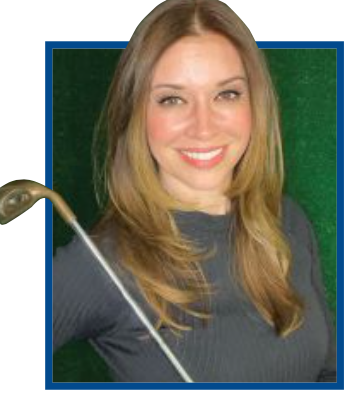
It's All About Rotation, Speed, & Flexibility
NCGA Magazine
The problem isn’t that you’re not working out enough...it’s that your current fitness is not addressing the weakest links in your golf body, specifically rotation, speed and flexibility.
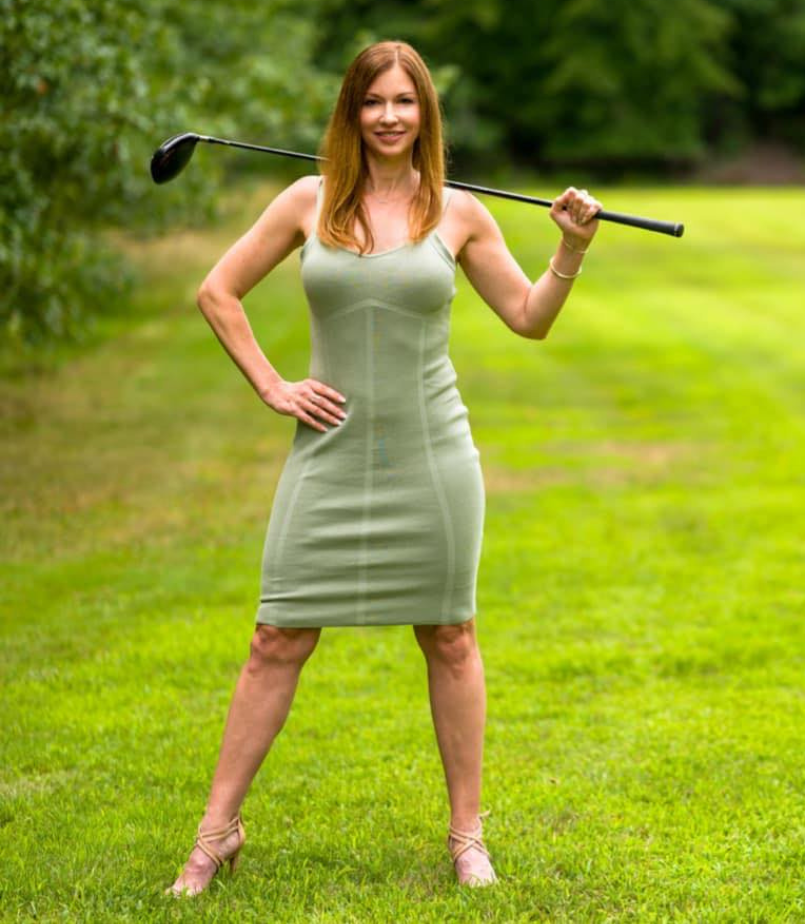
Virtual Golf Fitness Engagement
Golf Fitness Monthly
COR Golf Fitness is unique in that I engage with clients at their country clubs, courses or gyms, but conduct 90% of my instruction virtually with a 90 day online program that focuses on golf flexibility and speed for golfers age 45 and over...