
The Freddie Effect: Why Flexibility Is the Secret Behind the Smoothest Swing in Golf
The Freddie Effect: Why Flexibility Is the Secret Behind the Smoothest Swing in Golf
You've watched his swing a hundred times. You know exactly what it looks like. And deep down, you remember when yours felt something like that.
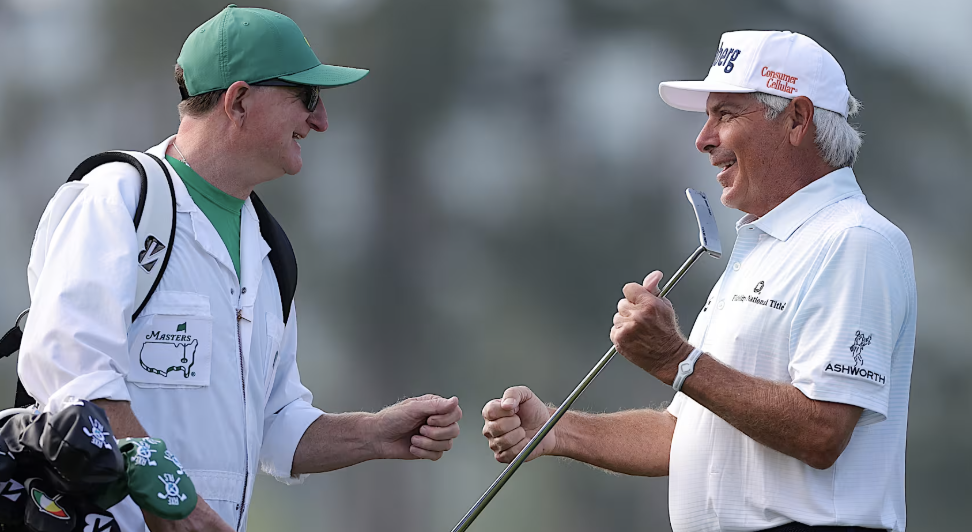
Freddie was 32 when he won the Masters in 1992. He's now in his 60s. And his swing still looks smoother than most golfers half his age.
No one watching that swing — the easy tempo, the effortless release, the almost lazy-looking power — can quite figure out how he does it. Golfers have watched the slow-motion breakdowns. Taken lessons trying to copy his timing. Bought new clubs hoping something would click.
But most never stop and ask the one question that matters:
What does Freddie's body allow him to do that mine no longer can?
That's what this post is going to answer.

Why the Freddie Effect Is So Hard to Copy
Freddie's swing works because his hips, shoulders, and back all rotate freely together in a sequence that looks effortless because, for his body, it is.
When your body moves freely, the swing flows — the club accelerates naturally, speed happens without forcing it, and your balance holds through impact.
That's not a technique thing. That's a body thing.
And here's the frustrating truth most golfers over 45 eventually run into: you can take all the lessons you want, but if your hips stop turning freely or your back tightens up, no instructor in the world will give you back that smooth, athletic swing.
Your swing will find a workaround for what your body can't do — and that's when you stop looking like Freddie.

What That Workaround Does to Your Swing
When your body can't move the way the swing requires, it doesn't give up. It finds another way.
Your rotation tightens, so your arms take over. Your back stiffens up, so your lower back does the work instead. Your hips stop turning, so your upper body tilts and dips to make up for it.
Every one of those workarounds changes your swing path, your contact, and your ball flight.
That's when golfers start blaming their technique, their clubs, or their age.
Most of the time it's none of those things. It's that the body can't move the way it used to — and that's something you can fix.
The 3 Things That Create the Freddie Effect
After years working with golfers over 45, I've found that the smooth, athletic swing golfers are chasing comes down to three things.
Rotational flexibility. The ability to turn your hips, back, and shoulders through a full range of motion without tightness stopping you. Once this goes, the swing flow goes with it.
Stability and balance. You can't create effortless power when your body feels wobbly or unstable. Freddie's swing looks smooth because nothing in his body is fighting the movement.
Moving in the right order. The golf swing works when your hips go first, then your torso, then your arms, then the club. Getting that sequence right requires flexibility and practice — not just gym work.
When all three are working, the swing starts to look the way golfers remember it feeling. Natural. Free. Repeatable.

A Simple Test You Can Try Right Now
Sit tall in a chair. Cross your arms over your chest. Rotate slowly to the right as far as you comfortably can. Then rotate to the left.
Ask yourself a few things. Does one side feel tighter than the other? Does your lower back round when you turn? Do you run out of rotation before you reach a full shoulder turn?
If yes to any of those — your body may be holding back your golf swing more than you realize. It's one of the most common things I see in golfers over 45, and it's directly tied to losing distance, losing consistency, and losing that smooth Freddie-style swing.

Why Most Golfers Can't Get It Back (And What Does Work)
The instinct for most golfers is to try harder — more lessons, more practice time, more drills.
But trying harder doesn't help when your body can't move the way the swing requires.
What works is a golf-specific flexibility plan built around three things: restoring how your body moves first, then building rotational speed, then adding the strength and stability that supports it all.
That's the correct order. Most golfers skip the first step entirely — or jump straight to strength training without addressing why the swing feels tight in the first place.
Here's the good news: your body responds surprisingly well to the right flexibility work, even if you haven't trained in years. Golfers regularly start noticing changes within the first 30 days — more shoulder turn, better hip rotation, less effort in the swing.
The Freddie Effect isn't reserved for people with Freddie's genes or Freddie's swing history. It's available to anyone whose body moves the way the golf swing needs it to.

Freddie doesn't swing the way he does because he figured out some secret technique. He swings that way because his body still moves freely.
That's it. That's the whole thing.
And for golfers over 45 who've watched that swing and wondered what they've lost — it's not gone. It just needs to be rebuilt.
Not with more lessons or new clubs — with a plan that addresses what your body needs.
Carrie O'Rourke is a TPI Certified Golf Fitness Professional and recipient of the Golf Fitness Association of America award for Best Golf Fitness Program. She helps golfers over 45 improve flexibility, increase swing speed, and play with less pain using the Pacesetter Player Methodology.


