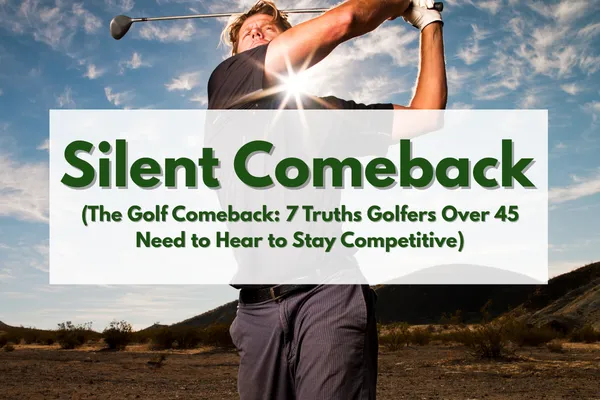
Golf Comeback After Age 45
The Golf Comeback: 7 Truths Golfers Over 45 Need to Hear to Stay Competitive
“After just 6 weeks of flexibility and speed workouts I’ve gained 4mph swing speed and more distance” - Byron, age 68 Utah
If you’re still competing, still keeping a handicap, still caring deeply about how you play, but quietly wondering if your best golf is behind you, this list is for you.
Most golfers never say it out loud. They just adjust expectations, stop chasing distance, or blame age.
That’s not wisdom. That’s a misunderstanding of what’s actually happening.

Here are 7 truths competitive golfers over 45 need to hear if they want their best golf back.
1. Your decline didn’t start with age — it started with stiffness
Distance doesn’t disappear overnight.
Consistency doesn’t vanish because of a birthday.
What quietly changes is your ability to rotate the way you used to. Stiffness creeps in gradually and most golfers adapt without realizing it, until they realize their handicap has gone up 30% in the last 5 years.
2. Competitive golfers don’t stop playing, they stop believing
You still practice.
You still invest in clubs and lessons.
You still show up for tournaments.
But somewhere along the way, expectations soften. Birdies feel optional. Pars feel like wins.
That mental shift isn’t maturity, it’s the body quietly limiting what you believe is possible.
3. Swing fixes stop working when the body becomes the bottleneck
Early in your golf life, a swing change could create distance immediately..
After 45, the same fixes don’t work as fast..
Not because the instruction is wrong, but because your body can’t support the change.
When mobility, stability, or strength is missing, the swing adapts around the limitation. You can’t outswing a slow and stiff body.

4. The best golfers your age aren’t training harder, they’re training smarter
Winning club championships at 50, 60, and beyond isn’t about grinding in the gym.
It’s about:
Restoring lost flexibility
Reclaiming rotational speed
Building strength after movement is restored
The order matters. Skip it, and you feel tight, slow, or beat up.
5. Your body is either adding speed, or stealing it
Many golfers assume their swing speed naturally declines with age. The truth? It doesn’t have to.
Your body either enables your swing or limits it. Tight hips, stiff shoulders, or restricted rotation slow down the swing. The result isn’t just slower clubhead speed, it’s swings that feel inconsistent, no matter how much you practice.
By restoring mobility and strength in the right areas, your body can actively add speed, rather than quietly robbing it from you.
6. General workouts and random stretches won’t save your game
Being “in shape” is not the same as golf-fit.
Generic workouts miss the exact movements that matter most for your swing. Random stretches feel good but don’t change your distance or consistency off the tee..
Competitive golfers need targeted training that matches how the body actually functions in the golf swing, especially after age 45.
7. The comeback happens quietly, before the scorecard shows it
The real turning point isn’t a new PR or tournament win.
It’s the moment when:
Your backswing feels unrestricted again
Speed returns without forcing it
You stop guarding your body for fear of injury
That’s when confidence comes back.
That’s when belief returns.
And that’s when the Silent Comeback begins.
Final Thought
Your best golf isn’t behind you.
But it won’t come back through more swing tweaks, another new driver or more time on the range.
It comes back when your body stops being the limiting factor, and starts supporting the golfer you still are.
Watch the golf training:
About Carrie O'Rourke TPI Certified | GFAA Award Winner | Creator of the Pacesetter Player Method
Carrie specializes in golf fitness for competitive golfers over 45, helping them reclaim distance, prevent injury, and play their best golf for decades to come through her proprietary flexibility-first approach at COR Golf Fitness.


